What to Check Before Visiting a Playground After Rain in Singapore
Rain stopped? Check lightning, wet slides, climbing equipment, puddles, sand and drainage before letting children play at an outdoor playground in Singapore.
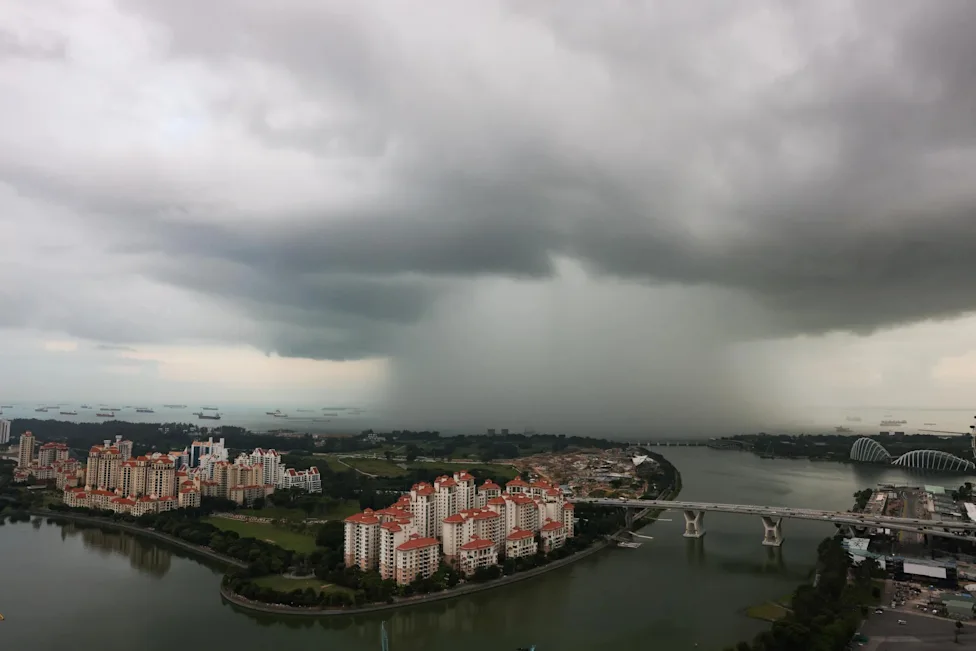
The rain has stopped, the sky looks brighter and your child is already asking whether the playground is open again. In Singapore, though, a playground can look perfectly usable from a distance while still being slippery, waterlogged or sitting under an active thunderstorm cell.
The first thing to check is not the slide. It is the weather.
If you can still hear thunder, outdoor play should wait. Once the storm has properly moved on, the next step is simply to look at the playground itself. Slides, rope nets, timber, sand and rubber flooring all dry at different speeds, so there is no reliable rule such as “wait one hour and it will be fine”.
A light passing shower followed by strong sun can leave an exposed playground usable fairly quickly. A heavy afternoon thunderstorm can leave shaded equipment and nature-play areas wet for much longer.
The short answer
Before letting children start playing, check for lightning, wet climbing surfaces, slippery slides, puddles, waterlogged sand and any temporary closures or storm damage.
The most useful rule is this: rain stopping does not necessarily mean the playground is ready.
If the playground is still very wet, it may be easier to change plans and head somewhere sheltered or indoors rather than spending the outing constantly steering a toddler away from slippery equipment.
Check for lightning before you check anything else
Singapore storms often move quickly, which can make it tempting to head straight back outside as soon as the rain eases. Thunderstorms, however, can still be nearby even when there is no rain falling directly over you.
The Meteorological Service Singapore advises waiting at least 30 minutes after thunder was last heard before resuming outdoor activity.
That is a more useful benchmark than watching the rain alone.
If you can still hear thunder, stay under proper shelter. This matters particularly at open park playgrounds, rooftop play areas and water-play spaces where there may be very little substantial shelter nearby.
Once the thunder has stopped and conditions have cleared, then it makes sense to inspect the playground.
Start with the slides
Slides are usually the easiest part of a playground to check. Run your hand over the slide surface, then look at the steps or climbing route leading up to it. Water often lingers on the platform at the top even when the slide itself looks mostly dry.
Wet slides can also behave differently from dry ones, particularly on steeper or more polished surfaces.
This is not just general caution: NParks specifically advises against using the slides at Coastal PlayGrove when they are wet.
The same approach works well elsewhere. If the slide and its access route are still obviously wet, let the children use a drier part of the playground first.
Climbing equipment can stay wet longer than you expect
Climbing structures need a closer look because water tends to hide in exactly the places children put their feet and hands.
Check ladder rungs, climbing-wall holds, rope bridges, nets, platforms and hand grips. A playground may look almost dry from the path while recessed footholds and shaded ropes are still holding plenty of moisture.
Rope equipment can be particularly deceptive. Thick ropes may remain damp long after nearby plastic surfaces have dried, and children may also arrive at the structure with wet shoe soles after walking through the surrounding grass or rubber flooring.
For an older child who is confident on the equipment, that may simply mean choosing another route. With toddlers or children who are still developing their balance, we would be more conservative.
Look at the ground, not just the equipment
Rubber playground flooring generally copes well with Singapore weather, but it does not always dry evenly.
Low points can collect water, slopes may remain slick and puddles often form at the bottom of slides or along the edges between different surfaces.
A puddle in one corner does not necessarily mean the entire playground is unusable. At larger playgrounds, one play zone may dry much faster than another.
The important thing is to look at where the children will actually run.
If a toddler needs to cross a wet slope every time they want to reach the slide, that part of the playground probably needs more time even if the slide itself is dry.
Sand is not automatically a problem after rain
Wet sand can actually be quite good for play. It is easier to shape, dig and build with than very dry sand.
After a heavy downpour, however, there is a difference between pleasantly damp sand and a sand pit that has become waterlogged.
If you are visiting a playground with a large sand area, take a quick look before committing to it. Some children will be delighted by the extra mud and water. Some parents will be less delighted when the next stop is lunch.
For sand-heavy and nature-play playgrounds, a spare set of clothes is often more useful than trying to keep everyone completely dry.
Nature playgrounds often need longer to recover
Nature play changes more noticeably after rain because the playground surface is part of the experience.
Logs, gravel, soil, timber, slopes and planting areas do not behave like a conventional soft-fall surface. A plastic slide may be almost dry while a shaded log is still slick and the ground around it remains muddy.
At a nature playground, we would pay particular attention to wooden climbing features, muddy slopes, waterlogged sand and puddles around stepping elements.
If the playground is part of a larger park or nature reserve, also consider the route to and from it. NParks advises visitors to avoid forested areas during and immediately after bad weather.
This does not mean every playground surrounded by trees should be avoided after rain. It simply means a nature-play outing deserves a little more judgement than checking whether a plastic slide feels dry.
Wooden equipment can be deceptively damp
Timber often takes longer to dry than exposed plastic or metal, especially in shaded playgrounds.
It may not look particularly wet, but the surface can still feel slick under shoes. Natural timber balance beams and logs are especially worth checking because children are relying on grip rather than handrails.
Instead of judging by how much time has passed, touch the surface itself.
This is one of the reasons a fixed “wait 30 minutes after rain” rule does not work for playground equipment. The 30-minute guidance is useful for thunder; drying time depends on the playground.
Check the route into the playground too
Sometimes the playground itself is usable, but getting there is awkward.
Grass beside the play area may have turned muddy, a stroller route may have pooled water or the shortest approach through a park may be much wetter than the playground surface itself.
This matters more with toddlers than it might seem. Wet shoes picked up on the walk in can turn a dry climbing structure into a slippery one.
If you are visiting a large park, it can be worth using a slightly longer paved route rather than taking the most direct path across wet grass.
Be more cautious after a proper storm
A brief shower and a heavy thunderstorm are not the same thing.
After strong wind and heavy rain, take a quick look beyond the playground equipment. Check for fallen branches, debris, temporary barriers or maintenance signs before the children rush in.
If part of a playground has been cordoned off, leave it alone even if the equipment itself looks fine.
For popular parks, it is also worth checking whether there are current maintenance notices before making a longer trip.
Our guide to Best Times to Visit Popular Singapore Playgrounds can be useful if you are deciding whether to wait for later in the day instead.
What about puddles and mosquitoes?
A puddle that appeared during a rainstorm does not instantly become a mosquito problem.
The concern is water that remains stagnant for long enough to become a breeding habitat.
For parents arriving shortly after rain, the more immediate issue is whether puddles make the playground slippery or difficult to access. If you repeatedly notice standing water remaining in the same area for prolonged periods, that is worth reporting to the relevant operator, town council or authority.
Water playgrounds are different
A managed water-play facility should not be treated the same way as ordinary playground equipment that happens to be wet.
Purpose-built water playgrounds have their own operating hours, maintenance schedules and water systems. Whether they are open depends on the facility, not simply on whether it has been raining.
For example, Coastal PlayGrove’s water-play area operates on its own schedule, separate from the surrounding playground and nature-play areas. Bishan–Ang Mo Kio Park’s Water Playground also runs during designated sessions rather than whenever the wider park is open.
If you are planning proper water play, see our guide to What to Bring to a Water Playground in Singapore.
The useful distinction is simple: managed water play is one thing; rainwater sitting on normal playground equipment is another.
Shoes matter more after rain
A playground can be mostly dry and still become difficult to use if your child’s shoes are wet.
Children are very good at finding the one puddle everyone else has avoided. Once the soles are wet, climbing steps and smooth surfaces become more slippery even if the equipment itself has already dried.
For an after-rain visit, shoes with reasonable grip are preferable to loose sandals or flip-flops, especially at climbing-heavy playgrounds.
A spare pair of socks is also one of those small things that can rescue the rest of the outing.
Be slightly more cautious with toddlers
Older children are more likely to notice that a step is wet and adjust. Toddlers are more likely to charge straight up it because the slide is at the top.
With a younger child, we would start with low-level equipment and the driest parts of the playground rather than immediately letting them onto wet ladders, ropes or higher climbing structures.
This is also where the supervision difficulty field on SingaporePlaygrounds becomes useful. A playground that is easy enough to supervise on a dry day can feel quite different when half the equipment needs to be avoided.
How long should you wait after rain?
There is no universal answer.
An exposed playground may dry quickly once the sun returns. A shaded playground can remain damp for much longer. Timber, rope and sand often take longer than plastic.
Drying depends on how heavy the rain was, how much sun and wind the playground gets, how well it drains and what materials are used.
The only useful fixed time relates to lightning: wait at least 30 minutes after thunder was last heard before resuming outdoor activity.
For everything else, inspect the playground itself.
Is a sheltered playground always fine after rain?
Not necessarily.
A roof makes a big difference, but wind-driven rain can still reach the edges of a sheltered playground. Water can also be tracked inside on shoes, particularly during a busy downpour.
That is why SingaporePlaygrounds distinguishes between sheltered playgrounds and genuinely indoor, air-conditioned play spaces.
If you want the most predictable wet-weather option, see our guide to Free Indoor Playgrounds in Singapore.
When should you just switch to an indoor playground?
Sometimes that is the simplest answer.
If thunder is still around, more rain is clearly on the way, the playground is heavily shaded and soaked or your child mainly wants to use climbing equipment that is still wet, waiting around may not be worth it.
The same applies if you have already travelled a long way and need the outing to work.
Singapore has enough indoor and sheltered play options that changing plans is often easier than turning the whole visit into repeated negotiations about which parts of the playground are off-limits.
If you do switch to a paid indoor venue, our guide to How Long Should You Plan for an Indoor Playground Visit? can help with timing.
A simple after-rain check when you arrive
You do not need a complicated safety inspection.
Start by listening for thunder. If you can still hear it, wait.
Once the weather has cleared, look at the ground as you approach the playground. If it is full of puddles, you already have a good indication that drying may take some time.
Then touch the main equipment your child is likely to use. Check the slide, steps, platforms and handholds. Look at rope and climbing areas separately because they often stay wet longer.
After a particularly heavy storm, glance around for fallen branches, barriers or maintenance notices.
If part of the playground is dry, start there. The entire playground does not have to be ready at once.
What should you bring if the playground may still be damp?
A small towel, spare socks and an extra set of shorts or trousers can make a surprisingly big difference.
For sand or nature play, we would bring a full change of clothes if there is any chance the child will want to dig or splash around.
A wet bag or ordinary plastic bag is useful for damp clothing, and shoes with decent grip are preferable if climbing is likely.
Singapore often becomes very hot and humid soon after rain, so do not forget water simply because the afternoon started wet.
Frequently asked questions
Can children use a playground immediately after rain?
Sometimes. First make sure there is no ongoing lightning risk, then check the actual equipment and flooring. One playground may dry quickly while another remains wet for hours.
How long should I wait after a thunderstorm?
Wait at least 30 minutes after thunder was last heard before resuming outdoor activity.
Are wet slides okay to use?
We would wait until they are dry. Wet slides, steps and platforms can all become more slippery, and NParks specifically advises against using Coastal PlayGrove’s slides when wet.
Does rubber playground flooring dry quickly?
Often, but not evenly. Shaded sections, low points and slopes can remain wet after the rest of the playground looks dry.
Can children play in wet sand?
Yes, if the sand is simply damp. After heavy rain, however, it may become waterlogged or muddy, so whether it is practical depends on how messy you are prepared for the outing to become.
Are nature playgrounds okay after rain?
They can be, but timber, logs, soil and slopes tend to remain wet longer than conventional playground equipment. Check the actual surfaces before letting children climb.
Should I worry about mosquitoes straight after rain?
Not because of a freshly formed puddle alone. The concern is persistent stagnant water that remains long enough to become a breeding habitat.
What if I find damaged equipment or flooding?
Avoid the affected area and follow any closure signs. Report significant damage or persistent flooding to the playground operator or relevant authority. If the playground is listed on SingaporePlaygrounds, you can also use the Something changed? report so we can check the listing.
The bottom line
After rain, do not rely on the clock alone. First make sure the thunderstorm has properly passed. Once it has, look at the playground you actually have in front of you. Slides, ropes, timber, sand and flooring all dry differently, and one section may be perfectly usable while another is still soaked.
If most of the playground is dry, there is no reason children cannot start with the usable parts. If everything is still slippery or waterlogged, changing plans is usually easier than spending the next hour telling them where they cannot play.
In Singapore, a rainy afternoon does not have to mean cancelling the outing – it may simply mean choosing a different playground.